
PERMEATION TESTING EQUIPMENT
MOCON permeation testing instruments analyse the gas permeability of oxygen (OTR), carbon dioxide (CO2TR), and water vapour (WVTR). These transmission rates are key to assessing barrier materials, which in turn aid the prediction of product shelf life, and the prevention of packaging failures and costly over-packaging practices.
- View Product
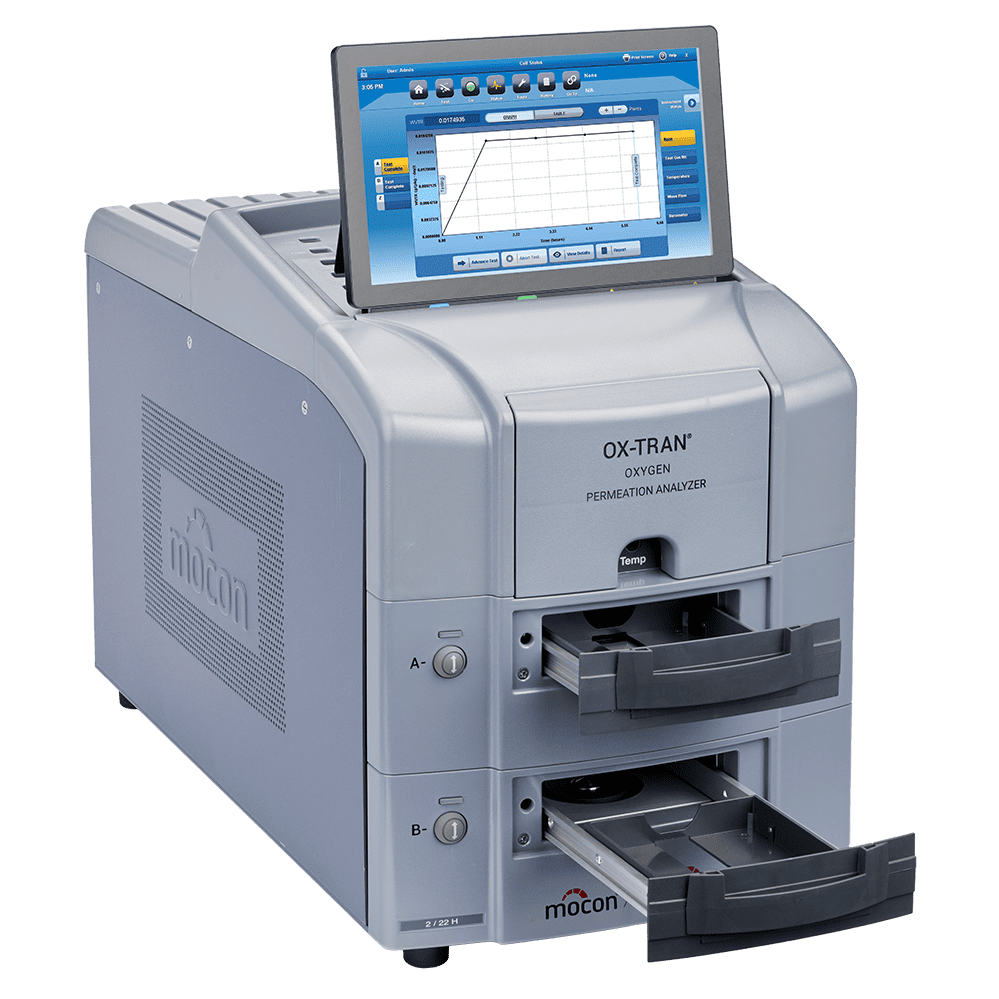
OX-TRAN ® 2/22
Ox Tran 2/22 is the world’s most advanced Oxygen permeation measurement system. Fully automatic testing, […] - View Product
OX-TRAN ® 2/12
The OXTRAN 2/12 the world’s most advanced permeation system. Fully automatic oxygen 02 permeation system […] - View Product
OX-TRAN ® 2/28
The OX-TRAN 2/28 H is designed for laboratories that routinely perform a high quantity of […] - View Product
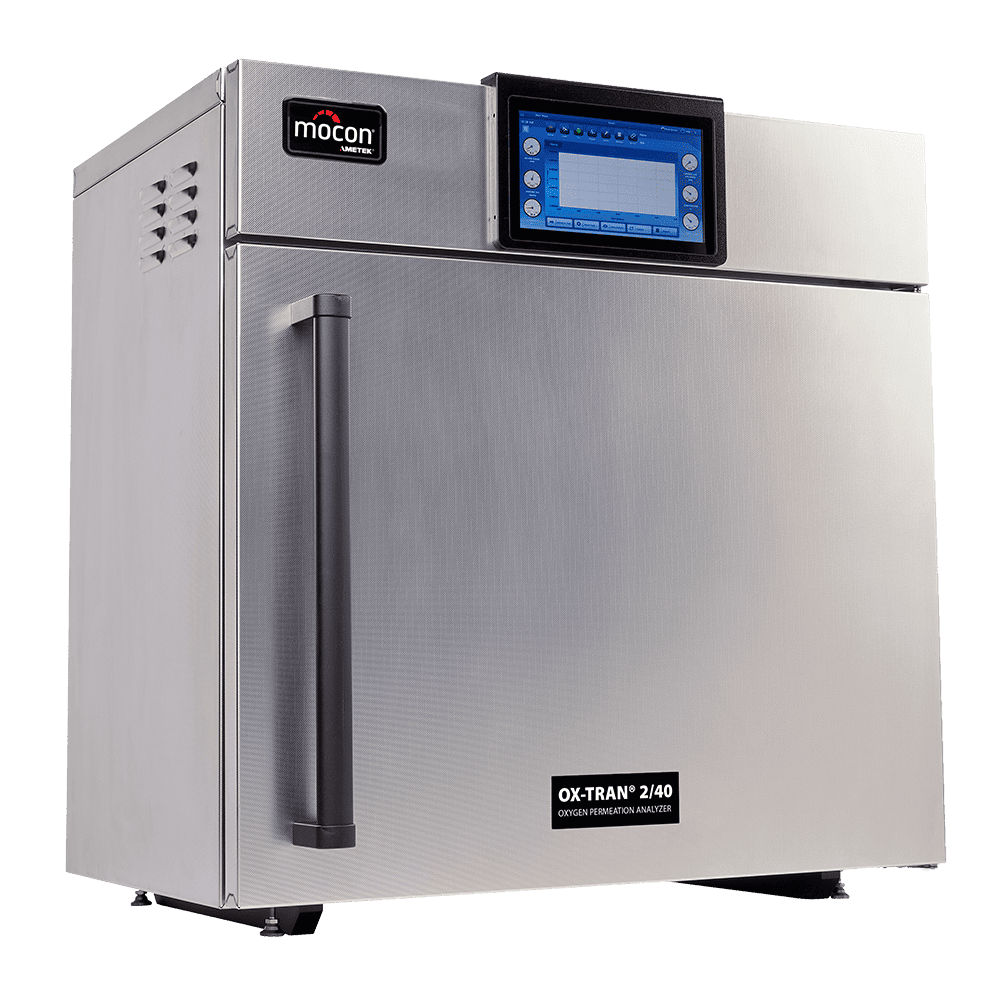
OX-TRAN ® 2/40
The OX-TRAN Model 2/40 Oxygen Permeation Analyzer is specifically designed to measure the oxygen transmission […] - View Product
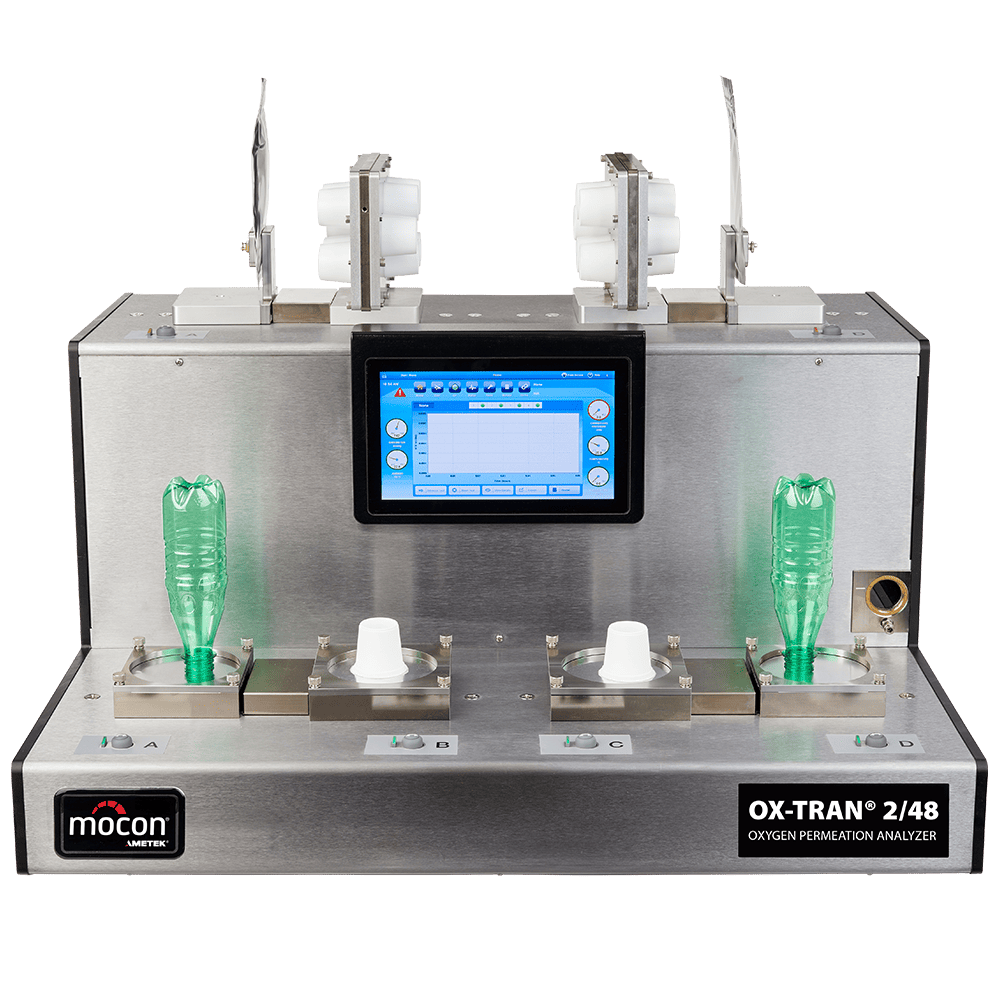
OX-TRAN ® 2/48
The OX-TRAN 2/48 series is the ideal solution for ambient whole package testing for OTR, […] - View Product
PERMATRAN-W ® 3/34
The world’s most advanced Water Vapour permeation measurement system. Fully automatic testing, fast set-up, faster […] - View Product
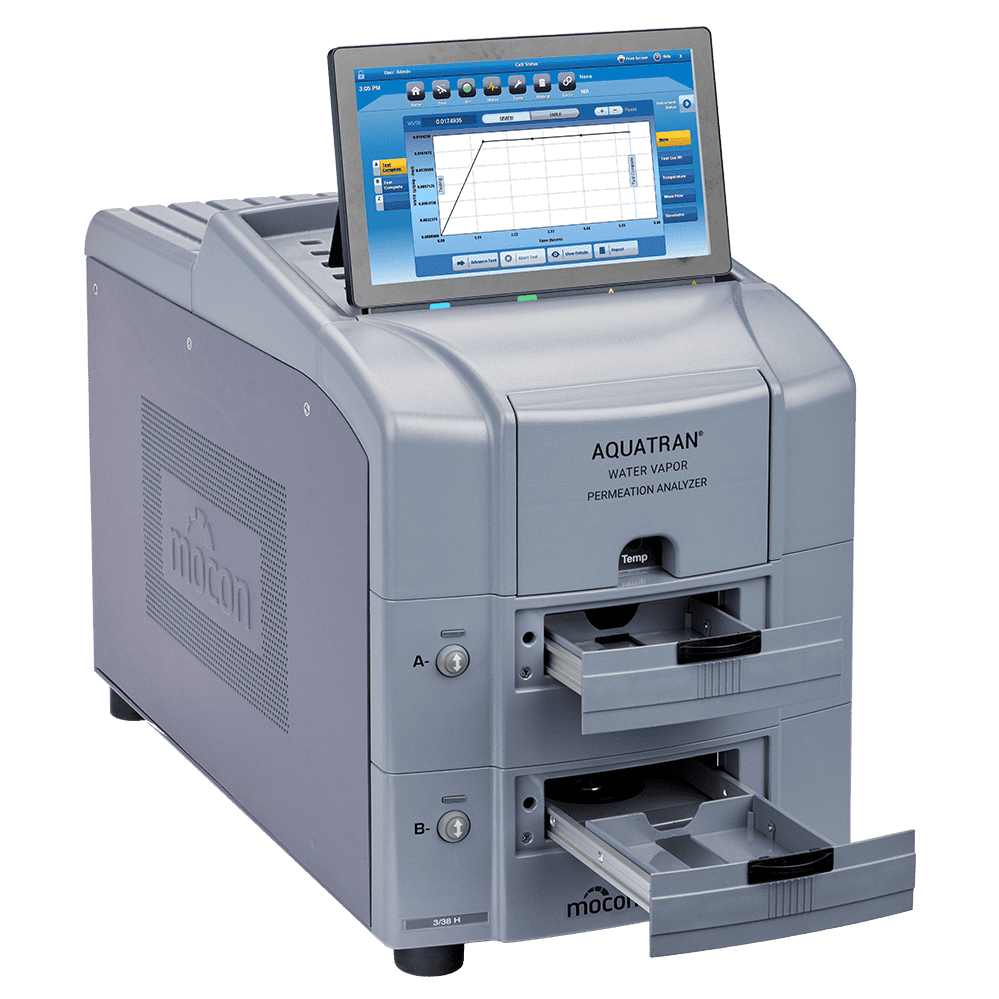
AQUATRAN® 3/38
The AQUATRAN® 3/38 H is designed for laboratories that routinely perform a high quantity of […] - View Product
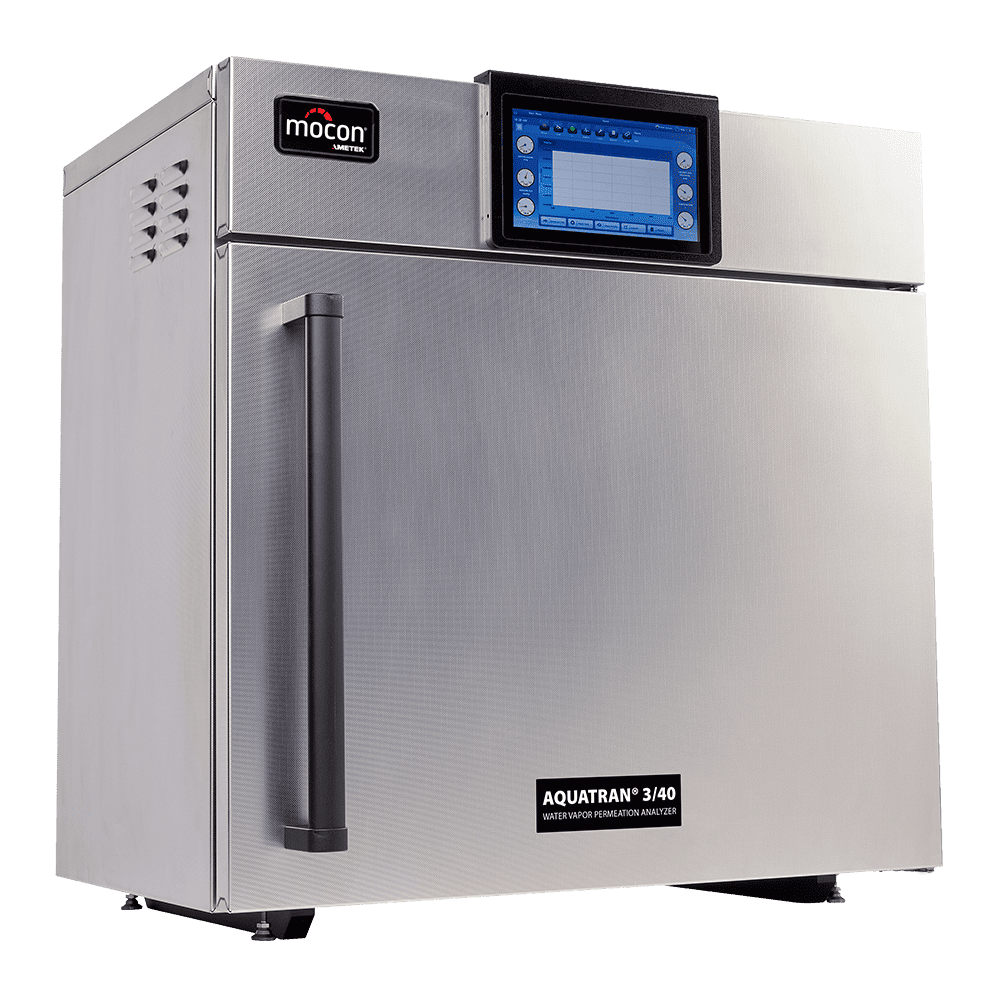
AQUATRAN ® 3/40
The AQUATRAN 3/40 is the next evolution in whole package testing for Water Vapor Transmission […] - View Product
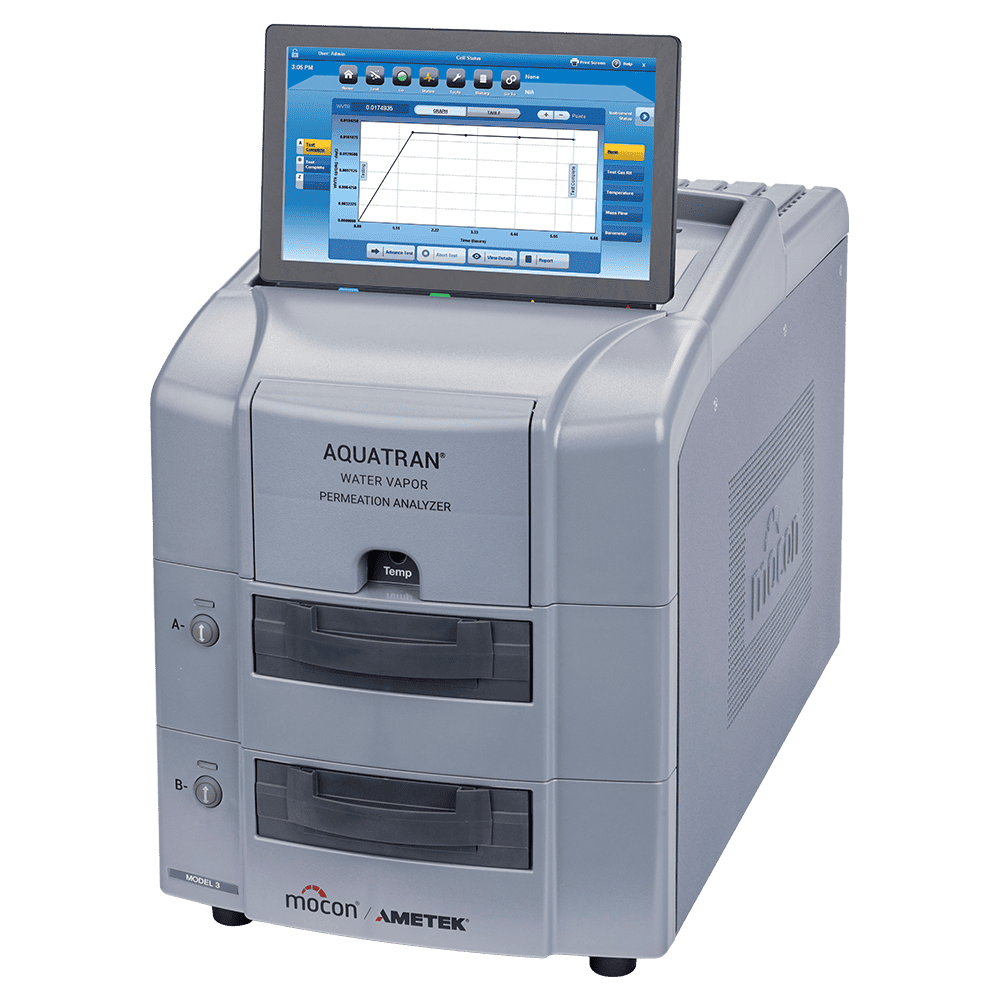
AQUATRAN ® Model 3
Highest Sensitivity for the Most Demanding Applications The AQUATRAN 3 analyzer is the industries most […] - View Product
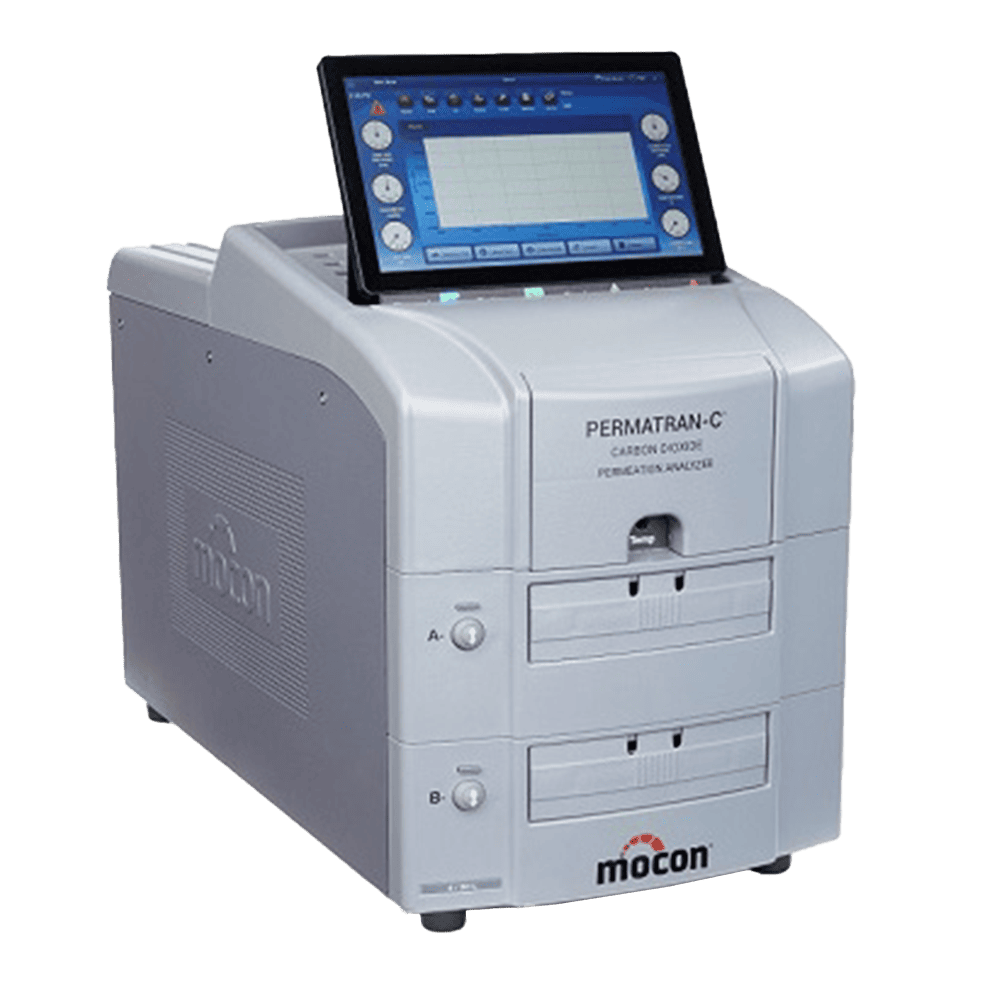
PERMATRAN-C ® 4/30
Carbon Dioxide permeation rate measurement system for films and packages. The PERMATRAN-C 4/30 CO2 permeation […] - View Product
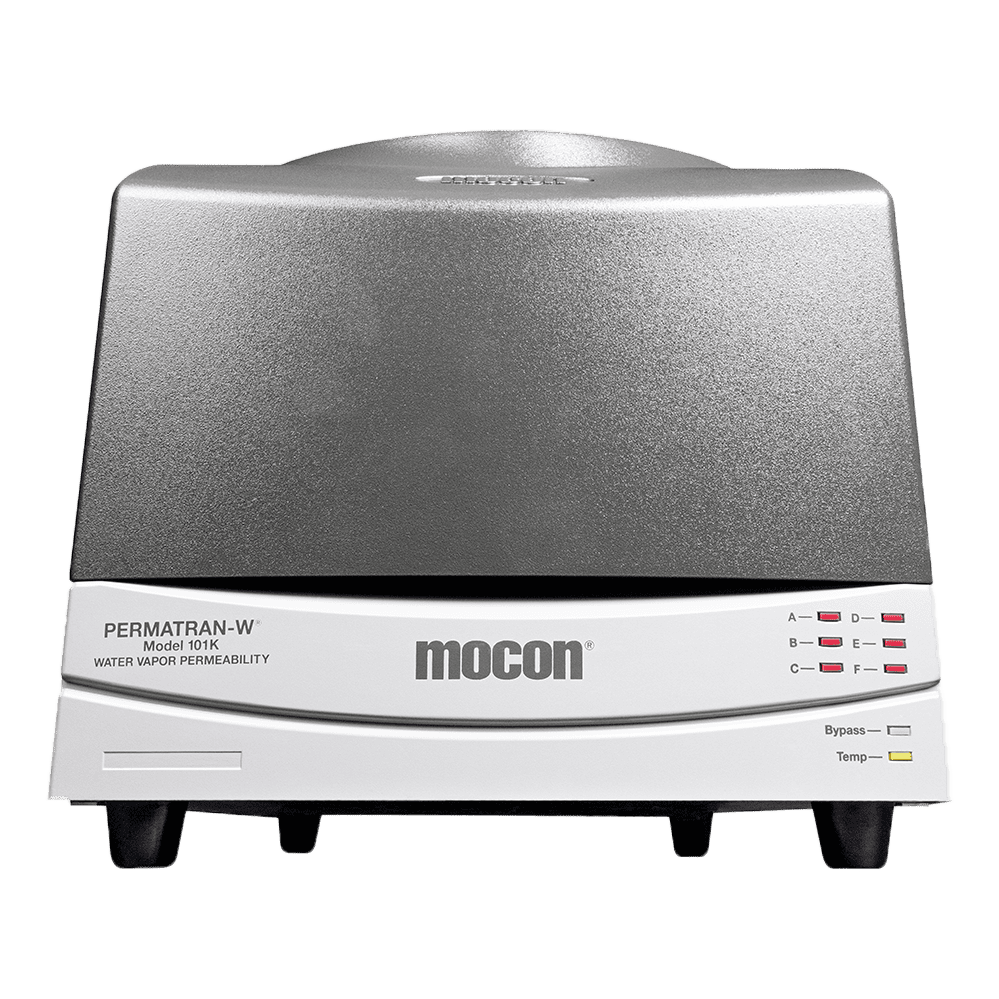
PERMATRAN-W® Model 101K
WVTR transmission rate testing of non-wovens, fabrics, textiles, breathable membranes, plastic films and paper. The […]



FAQs ABOUT PERMEATION TESTING
What is permeation testing, and why is it used for packaging?
Permeation testing measures the rate at which a gas or water vapour passes through a barrier material under controlled conditions. Permeability testing helps packaging teams assess whether a material provides the oxygen, moisture, or carbon dioxide barrier their application requires. The result supports material comparison and specification decisions, but is not a complete measure of packaging performance. The relevant gas, specimen type, and test conditions must be defined before results can be interpreted meaningfully.
What is Oxygen Transmission Rate (OTR)?
Oxygen Transmission Rate (OTR) measures how much oxygen passes through a material over time under specified test conditions. For films, results are commonly expressed as a volume of oxygen per unit area per day, with the gas-volume reference conditions stated. ASTM D3985 describes an OTR method for plastic film and sheeting using a coulometric sensor. When comparing results, check the temperature, humidity, oxygen concentration or pressure difference, and reporting units – not just the numerical value.
What is Water Vapour Transmission Rate (WVTR)?
Water Vapour Transmission Rate (WVTR) measures the mass of water vapour passing through a material over time under specified temperature and humidity conditions. Film results are commonly expressed in grams per square metre per day (g/m²/day). ASTM F1249 describes a method using a modulated infrared sensor. WVTR data helps assess a material’s moisture barrier, but values should only be compared when the test conditions and reporting basis are compatible.
What is Carbon Dioxide Transmission Rate (CO2TR)?
Carbon Dioxide Transmission Rate (CO2TR) measures how much carbon dioxide passes through a barrier material over time under specified conditions. Film results are commonly expressed as a gas volume per unit area per day, with reference conditions stated. ASTM F2476 describes a method using an infrared detector. CO2TR is a separate measurement from OTR: an oxygen transmission result should not be treated as a substitute for measured carbon dioxide transmission data.
Do I need OTR, WVTR, or CO2TR testing?
Select the measurement according to the barrier requirement, and note that an application may require more than one measurement. Start with the product protection requirement and agreed acceptance criteria. Identify which gases or vapours need to be controlled, then specify representative test conditions and the appropriate material or package test. There is no single transmission-rate test that characterises every barrier requirement.
Should I test flat film or the finished package?
Test flat film when you need to characterise or compare the barrier material itself. Consider a suitable whole-package method when the question concerns the assembled packaging system, including its format, seals, and closures. Film and package results have different reporting bases: film results are normally expressed per unit area, while package results may be expressed per package. Do not compare these numbers directly or assume that a film method automatically covers finished-package testing.
How do temperature and humidity affect permeation results?
Temperature and humidity are part of the test conditions, not optional background information. Their influence depends on the material, the permeant, and the conditions used; results obtained under different conditions should not be treated as directly equivalent. Agree the conditions before testing and report them alongside the result. Avoid applying a universal temperature multiplier or assuming that a change in thickness will always produce a proportional change in transmission rate.
Is permeation testing the same as leak testing?
No. Permeation concerns transmission through a barrier material, whereas leak testing investigates passage through defects or other unintended paths in the packaging system. A material transmission-rate result does not demonstrate that a finished package is leak-free. Where both barrier performance and package integrity matter, specify appropriate tests for each rather than expecting one measurement to answer both questions.
Which standards are used for permeation testing?
Common material-testing references include ASTM D3985 for oxygen transmission using a coulometric sensor, ASTM F1249 for water vapour transmission using a modulated infrared sensor, and ASTM F2476 for carbon dioxide transmission using an infrared detector. Choose the method for the actual specimen and application. Confirm the applicable edition, scope, and agreed test conditions; these references should not be presented as blanket coverage for every material, instrument or finished-package format.
How do I choose suitable permeation testing equipment?
Define the gas or vapour to be measured, whether you are testing films or finished packages, the expected transmission range, and the required temperature and humidity conditions. Then check the proposed instrument’s documented capabilities against those requirements. When discussing your application with RDM Test Equipment, provide the material structure, specimen format, target test method, anticipated barrier level, and testing workload. Confirm model-specific suitability rather than assuming one analyser measures OTR, WVTR, and CO2TR or accommodates every package type.