TISSUE TESTING
Understanding how tissue absorbs water and retains residual solvents after processing helps you assess material performance and investigate quality issues. RDM Test Equipment supplies tissue testing equipment for measuring water absorption time and capacity, analysing residual solvents, and preparing samples. Explore the instruments below to compare tissue grades, investigate variations in absorbency and solvent retention, and establish repeatable quality-control checks.
- View Product
Pneumatic Circular Sample Cutter | N1750P
The pneumatic round sample punch consists of a serrated upper blade and a die, through […] - View Product
Tissue Absorption Apparatus | N6700
Device used to measure the water absorption time and the water absorption capacity according ISO […] - View Product
49-56 Digital Micrometer
The 49-56 Digital Micrometer enables accurate thickness measurements of a wide range of sheet-like substrates, […] - View Product
58-27 Bendtsen Roughness Tester
The 58-27 Bendtsen Roughness Tester is an advanced microprocessor-controlled instrument for measuring the roughness and […] - View Product
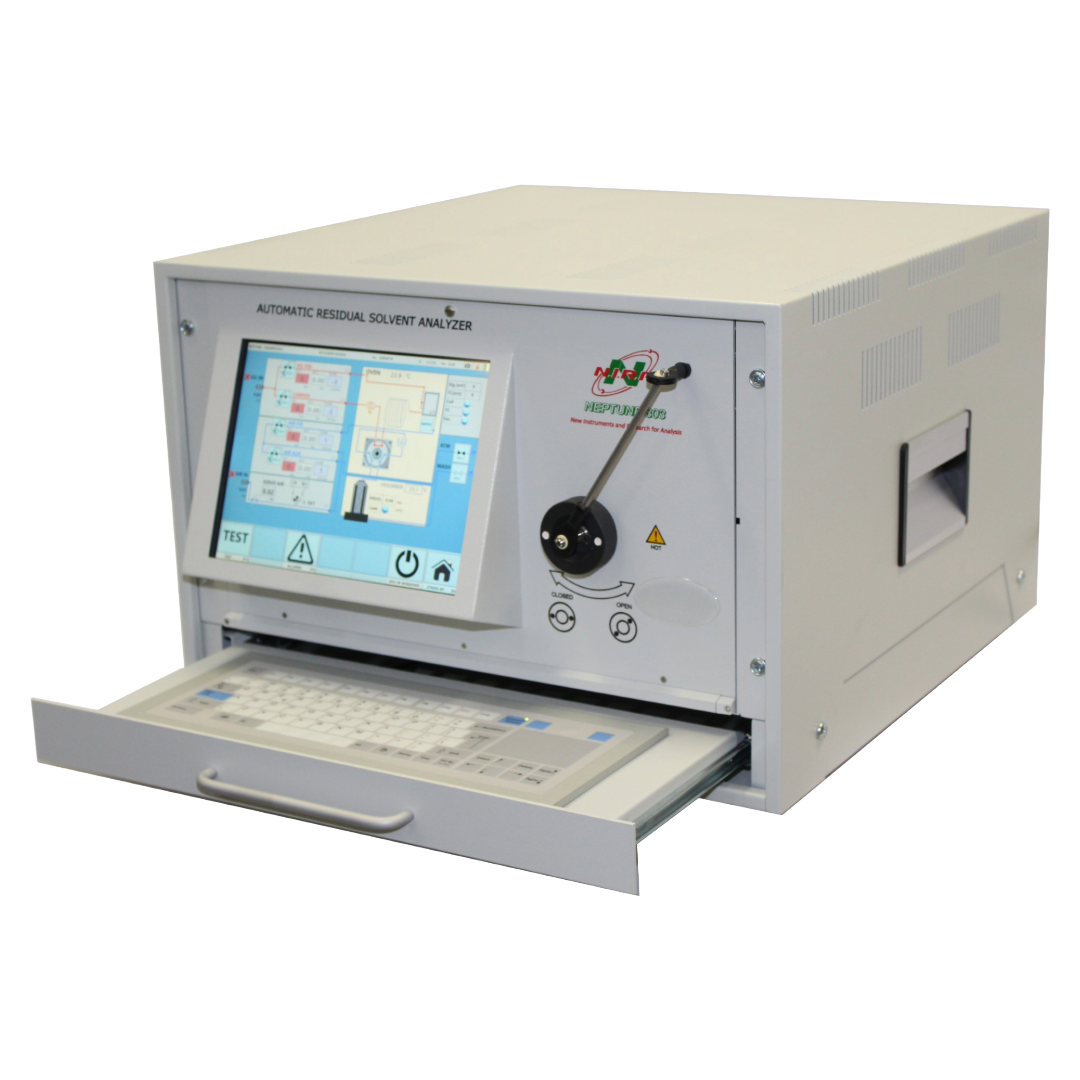
N.I.R.A. Neptune 803
The N.I.R.A. Neptune 803 is a fast residual solvent analyser for flexible packaging. It is […]


FAQs ABOUT TISSUE TESTING EQUIPMENT
What properties can be measured with tissue testing equipment?
The equipment on this page supports water absorption testing, residual-solvent analysis, and sample preparation. These serve different purposes: absorption testing assesses how tissue takes up water, while residual solvent analysis investigates volatile residues associated with relevant processing steps. Select the measurement according to the tissue application and the quality issue being investigated, rather than treating either result as a complete assessment of product performance.
What is the difference between tissue water absorption time and absorption capacity?
Water absorption time measures how long a tissue sample takes to become completely wetted under specified conditions. Water absorption capacity measures the mass of water absorbed relative to the sample’s dry mass, commonly expressed as grams of water per gram of tissue. One describes speed while the other describes quantity. Measuring both helps distinguish rapid wetting from the ability to hold water.
How is the water absorbency of tissue paper tested?
ISO 12625-8 specifies a basket-immersion method for measuring water absorption time and capacity. A prepared tissue specimen is placed in a standardised basket and allowed to immerse in water. The time to complete wetting is recorded. After the specified immersion and drainage periods, weighing determines the water absorbed. Following consistent conditions provides a basis for comparing tissue grades and production samples.
How should tissue samples be prepared for repeatable absorption testing?
Take representative samples and follow the selected method’s requirements for specimen preparation, conditioning, and handling. Use consistent test-piece quantities, suitable water, and the specified immersion and drainage procedure. Record the tissue identification and test conditions alongside the results. ISO 12625-8 references procedures for sampling and conditioning, helping laboratories avoid comparisons affected by differences in preparation rather than the material itself.
When should tissue products be tested for residual solvents?
Consider residual solvent testing where solvent-based inks, coatings, adhesives, or other relevant processing steps could leave volatile residues in the finished material. It should address a defined process risk or product specification, not an assumption that all tissue contains residual solvents. Testing can support investigations into unexpected odour or changes in drying performance, with results assessed against agreed requirements.
How are residual solvents measured in tissue products?
Headspace gas chromatography analyses volatile compounds (VOCs) released from a prepared sample under controlled conditions. The results are evaluated using an appropriate calibration and test procedure. For tissue applications, establish the solvents of interest, sampling procedure, and reporting requirements before routine testing. An analyser such as the Neptune 803 by N.I.R.A. should be configured and its suitability confirmed for the material and compounds being investigated.
How can early residual solvent testing help investigate production problems?
Timely results can help teams investigate drying or process changes before larger quantities of potentially non-conforming material are produced. Testing close to production makes solvent data available for earlier decisions, helping limit avoidable rework, waste, lost capacity and delivery delays. The benefit depends on representative sampling, defined acceptance limits, and prompt action – not solely the speed of an individual analysis.
How do I choose the right tissue testing equipment?
Establish the main query that you need to answer: how quickly tissue absorbs water, how much water it holds, or whether residual solvents remain after processing. For absorption testing, identify the required method and sample-preparation workflow. For solvent analysis, define the target compounds and reporting requirements. Discuss these needs, your tissue construction, and expected testing throughput with RDM Test Equipment to identify suitable equipment.