Published September 2026.
What is the Hidden Cost of Poor Seal Integrity?
Published August 2026.
By Phil Neal, Managing Director at RDM Test Equipment.
Spend enough time around high-speed packing lines and eventually you stop being interested in the seals that fail. The pack that malfunctions and reaches the leak tester visibly open gets pulled and subsequently binned. It’s doing exactly what it should – failing cheaply in front of the systems designed to catch it.
The seal that costs the real money is the unreliable one that still passed.

There’s a crucial difference that the industry tends to talk around rather than through: seal strength and seal integrity are not the same property. Proving one tells you very little about the other.
Seal strength is mechanical. It’s the force needed to peel a seal apart, measured on a tensile tester to standards like ASTM F88 and reported as a score that is put into a specification. Integrity is a different question entirely, and concerns whether the seal is continuous and free of the channels, pinholes, and weak spots that let oxygen, moisture, or microbes through. A seal can pull beautifully to specification and still have a channel leak running through it. Likewise, a seal can be perfectly continuous and still be too weak to survive a drop onto a warehouse floor. They’re two different questions that require two different tests to provide a solid answer.
Where this can bite financially is that too many packaging teams measure one of these properties well and assume the other has come along for the ride. The peel figures look healthy, so integrity is taken on trust. The pack holds in vacuum testing, so strength is assumed adequate. However, a pass on the wrong test is inherently more expensive than a clear fail, because a regular failure stops at your factory, while a false pass ships and moves through distribution. It sits on a shelf and reveals itself weeks later as a stale product, a spoiled batch, or a customer complaint, long after it was economical to put it right.
Most of the industry conversation about seal integrity is really about detection, such as better cameras, airborne ultrasound, vacuum decay, and fully inline inspection. All useful conversations to have, but inspection sorts the good packs from the bad. It does not make fewer bad ones. By the time a pack reaches the inspection station, its integrity was settled some time earlier, and almost always upstream at the seal itself.
For instance, if a seal window hasn’t been properly characterised, the line runs on a single setpoint with no real idea how much margin sits either side of it. If hot tack – the strength of a seal in the moment before it cools – has not been accurately measured, that failure point stays hidden until a high-speed line puts it under load. And if incoming film varies from roll to roll, or even within a roll, that variation will undermine an otherwise sound production process.
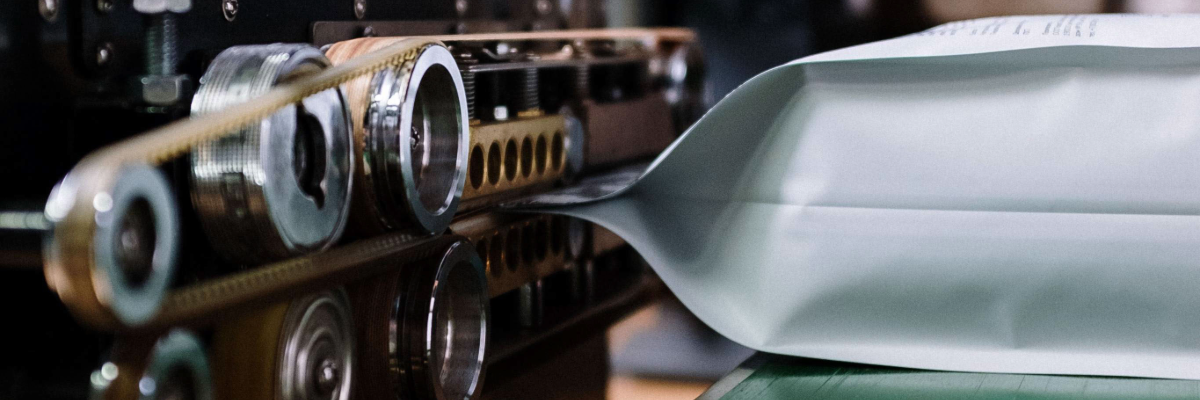
None of these issues will be caught by a better camera. Converters should look upstream, in the lab, and at goods-in, and ask how the material actually behaves before it is committed to a production run.
Characterise the window instead of guessing a setpoint. Measure hot tack – not just cold seal strength – if your line seals at high speed. Treat incoming variation as process information rather than noise. This approach is less glamorous than the latest inspection system with all the bells and whistles but is also a great deal cheaper than a recall.
At RDM Test, we spend much of our time on this upstream work, analysing seal integrity, hot tack behaviour, and laboratory sealing under controlled conditions. But the principle holds, whoever you test with: a good seal is made with solid fundamentals, not inspected into existence.
So, when someone tells us their seal integrity is under control because their reject rate is low, we tend to ask a slightly uncomfortable question. How many of the packs that passed would have failed a test you didn’t run? More often than not, nobody knows.
And that not-knowing, under the radar, unmeasured, and already shipped, is the real hidden cost.
Keep Reading